4-Week Puppy Training Routine: Potty, Crate, Commands
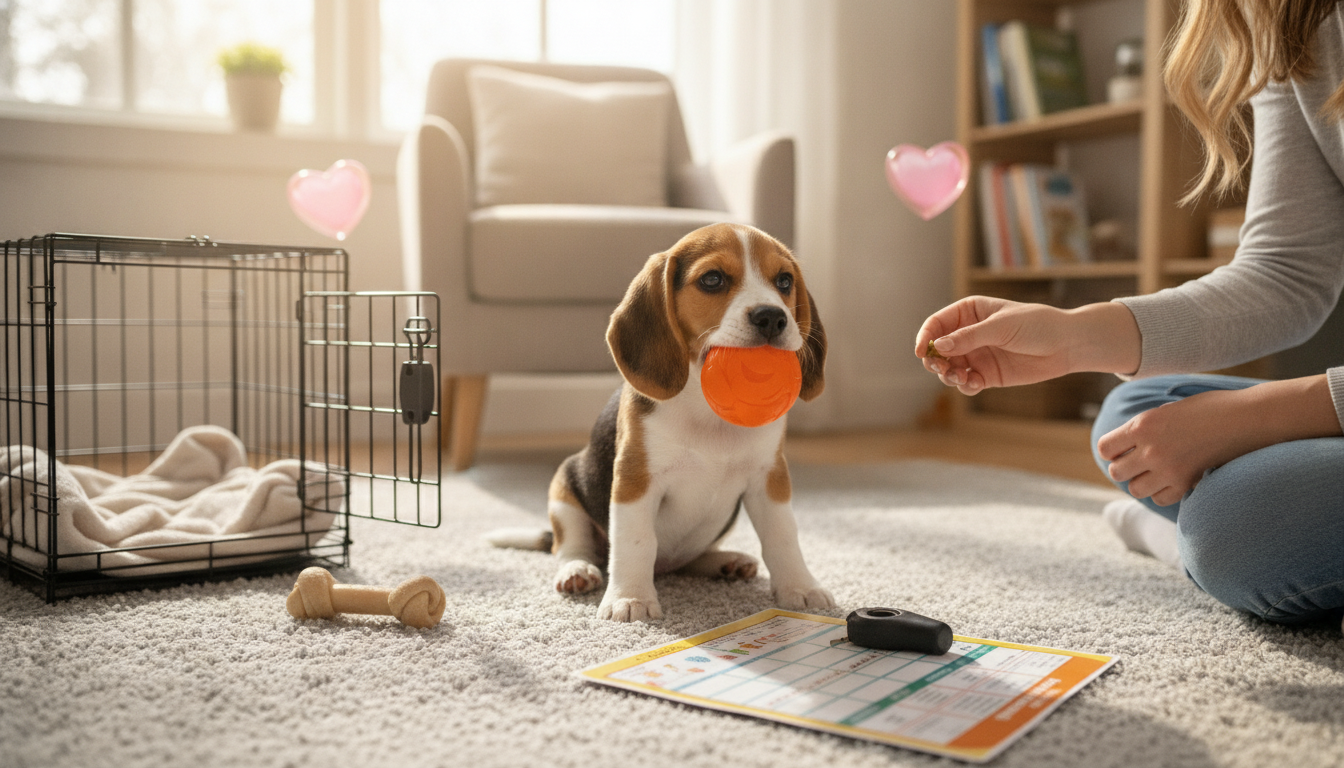
New Puppy Training Starter Guide: A 4-Week Routine for House-Training, Basic Commands, and Socialization
A new puppy learns fastest with a simple routine, clear rewards, and short, consistent practice. This beginner-friendly 4-week plan covers potty habits, crate training, foundational cues, and safe socialization—plus printable-style checklists and schedules that keep progress on track.
Before Training Starts: Set Up Success on Day 1
- Pick a confinement plan: a crate, exercise pen, or a puppy-proofed room prevents accidents and “practice” chewing.
- Choose rewards and a marker: use tiny soft treats and a marker word (like “Yes”) or a clicker so your puppy knows the exact moment they got it right.
- Create a potty station: pick one outdoor spot and use the same door/path every time to build predictability.
- Remove hazards and stock chews: secure cords, pick up small objects, and keep toxic foods/plants out of reach; offer 2–3 safe chew options.
- Plan vet timing: schedule a visit for vaccines and parasite prevention and ask about safe timing for public outings based on local risk.
For public exposure and socialization timing, the American Veterinary Society of Animal Behavior (AVSAB) provides widely cited guidance on balancing disease risk with early social learning.
The First Skill That Makes Everything Easier
If you teach one thing first, teach name recognition + attention. It’s the “on switch” for everything that follows.
- Say your puppy’s name once. When they look up, mark (“Yes”/click) and reward.
- Turn it into a tiny “come” game indoors: step back 3–6 feet, use an upbeat voice, reward generously, and end while they still want more.
- Use attention to support leash manners, polite greetings, impulse control, and preventing problem behaviors before they start.
- Keep sessions 1–3 minutes, several times per day.
House-Training Basics: Prevent Accidents, Build a Habit
House-training is mostly management plus timing. The goal is to make the correct choice easy and the incorrect choice unlikely.
- Go out proactively: after waking, after eating/drinking, after play, after training, and before bedtime.
- Supervision + confinement: if your eyes aren’t on your puppy, they go in the crate/pen so they can’t rehearse indoor potty.
- Reward the correct location: mark and treat immediately after they finish outside (not after you come back in).
- Track patterns instead of punishing: note the time and situation so you can tighten the schedule.
- Clean correctly: use an enzymatic cleaner to remove odor cues that invite repeat accidents.
For household hygiene reminders during puppyhood (especially with kids), the CDC Healthy Pets, Healthy People hub is a solid reference.
Crate Training and Alone-Time: Calm, Safe, and Gradual
- Make the crate pay: toss treats in, feed meals near/inside, and offer a safe chew only when your puppy is settled.
- Build duration in tiny steps: 30 seconds of calm becomes 1 minute, then 3, then 5—avoid big jumps.
- Practice door-closed while you’re present: then briefly step out; return during calm moments when possible.
- Use a nap rhythm: potty → short play → potty → crate with chew → quiet time.
- Never use the crate as punishment: it should predict rest and good things.
4-Week Beginner Routine (Daily Focus + What “Progress” Looks Like)
- Week 1: bonding, potty rhythm, name/attention, gentle handling, calm crate entry.
- Week 2: add “sit” and “down,” introduce leash indoors, start brief alone-time reps, keep potty tracking.
- Week 3: add “stay” foundations (very short), “leave it” basics, structured socialization experiences.
- Week 4: add reliable recall games, polite greetings, longer calm settle, safe distractions.
Progress looks like fewer accidents, faster responses to name, and calmer crate time—not perfection every day.
Sample Day Schedule for a Young Puppy
| Time | Activity | Goal/Notes |
|---|---|---|
| Wake | Potty outside + reward | Build immediate habit; no play until after potty |
| After potty | Breakfast + water | Use part of meal for training rewards if needed |
| 10–15 min | Play + 1–3 min training | Short sessions; end on success |
| Immediately after | Potty outside | Most puppies need to go after activity |
| Next 1–2 hrs | Nap in crate/pen | Promote calm; provide safe chew |
| Repeat cycle | Potty → activity → potty → rest | Predictable rhythm reduces accidents |
| Evening | Low-key play, handling, settle | Prevent overtired zoomies and biting spikes |
| Bedtime | Final potty + crate | Consider one night potty break based on age |
Core Commands to Teach First (Simple Steps)
- Sit: lure nose up/back, mark the moment hips touch, reward. Useful for greetings and impulse control.
- Down: lure from sit to the floor, mark when elbows hit, reward. Helps with calmness and handling practice.
- Come: start indoors with short distances, reward heavily, and never punish after your puppy comes to you.
- Leave it: low-value item in a closed fist, reward disengagement; then progress to open hand and floor practice.
- Settle/Place: reward calm on a mat, build duration, then add mild distractions.
For additional training fundamentals and age-appropriate expectations, the American Kennel Club’s puppy training basics is a helpful companion reference.
Socialization Without Overwhelm: Safe, Positive Exposure
- Quality over quantity: brief, positive exposures beat long, stressful outings.
- Pair novelty with rewards: treat while your puppy observes something new at a comfortable distance.
- Read body language: loose posture and curiosity are good; freezing, tucked tail, or frantic pulling means add distance.
- Handling socialization: paws, ears, mouth, brushing—tiny steps with treats to support vet/grooming comfort.
- Puppy-safe play: supervised, size/energy-matched playmates; interrupt rough play and reward calm check-ins.
Common Beginner Problems and Quick Fixes
Printable-Friendly Checklists to Stay Consistent
Training Plan Download: When a Step-by-Step Workbook Helps
- New Puppy Training Starter Guide (printable 4-week routine)
- Modern Etiquette Micro-Course (helpful for coaching calm, polite guest greetings and household routines)
FAQ
What is the first thing you should teach a new puppy?
Teach the puppy’s name and attention first: say the name once, then mark and reward eye contact. That attention skill quickly supports recall games, potty trips, leash practice, and calmer greetings.








Leave a comment